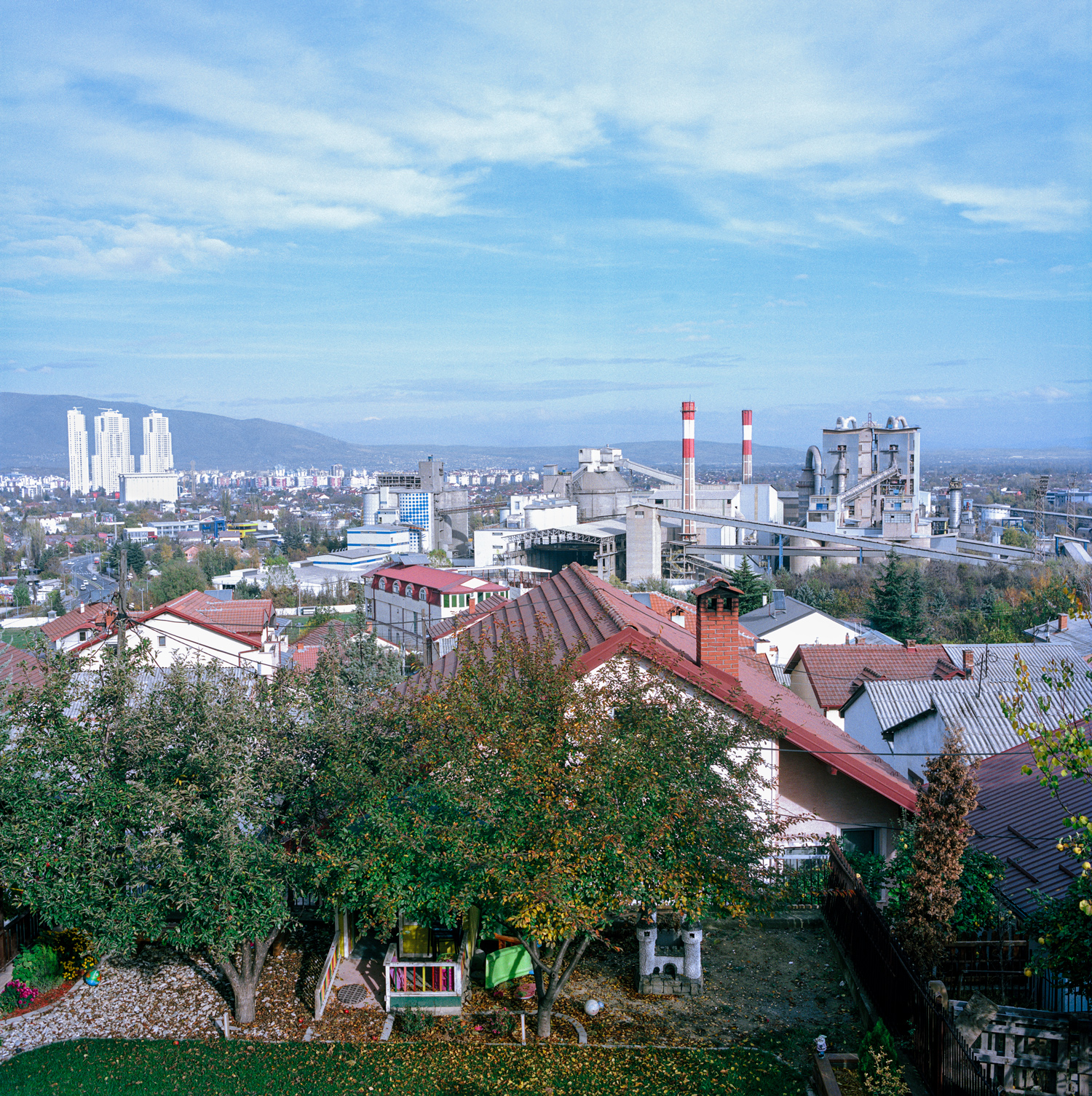
Just five kilometers from the city center stands Cementarnica Usje, a cement factory frequently identified as one of the largest contributors to air pollution in the capital. For over 25 years, it has been a pillar of employment in a fragile economy. At the same time, its towering chimneys have become a growing concern for the surrounding population, raising questions about the cost of industrial stability.
Skopje’s geography intensifies the problem. The city lies in a basin, enclosed by mountains, stretching roughly 25 kilometers east to west and 8 kilometers north to south. This natural enclosure traps pollution, preventing it from dispersing.
Each year, an estimated 2,574 people die prematurely due to air pollution, according to the World Health Organization and its BreatheLife initiative. The scale of the crisis is both environmental and deeply human.
Emission monitoring reports published by Cementarnica Usje provide data on particulate matter, nitrogen oxides, and sulfur dioxide. However, they do not include concentrations of heavy metals, despite the fact that the combustion of petroleum coke at the plant may release such pollutants into the air.
According to civic initiatives, pollution from the factory may include a wide range of harmful substances: fine particles, sulfur, nitrogen and carbon oxides, volatile organic compounds, metals and their derivatives, halogen compounds, dioxins and furans, as well as ammonia—alongside less visible but pervasive effects such as noise, vibrations, and odors.
In January 2023, the City of Skopje filed a criminal complaint against Cementarnica TITAN Usje, alleging that the plant emitted significantly higher concentrations of PM10 particles and other pollutants than permitted. Authorities classified the case as a serious offense against the environment and public health under the Criminal Code.
Although there have been proposals to relocate the factory, such a scenario remains unlikely in the near future. The scale of its infrastructure, combined with its economic importance, offers it a form of protection—one that is ultimately paid for through environmental degradation and public health risks.
Each winter, as households begin heating their homes, the situation worsens dramatically. With little wind, dense fog settles over the city, trapping pollutants in a thick, stagnant layer. During temperature inversions, when warm air sits above colder air, pollution becomes sealed in place, forming a toxic cloud over a population of nearly 700,000 people.
As a result, Skopje regularly ranks among the most polluted cities in Europe—a place where geography, industry, and everyday life converge into a persistent environmental crisis.