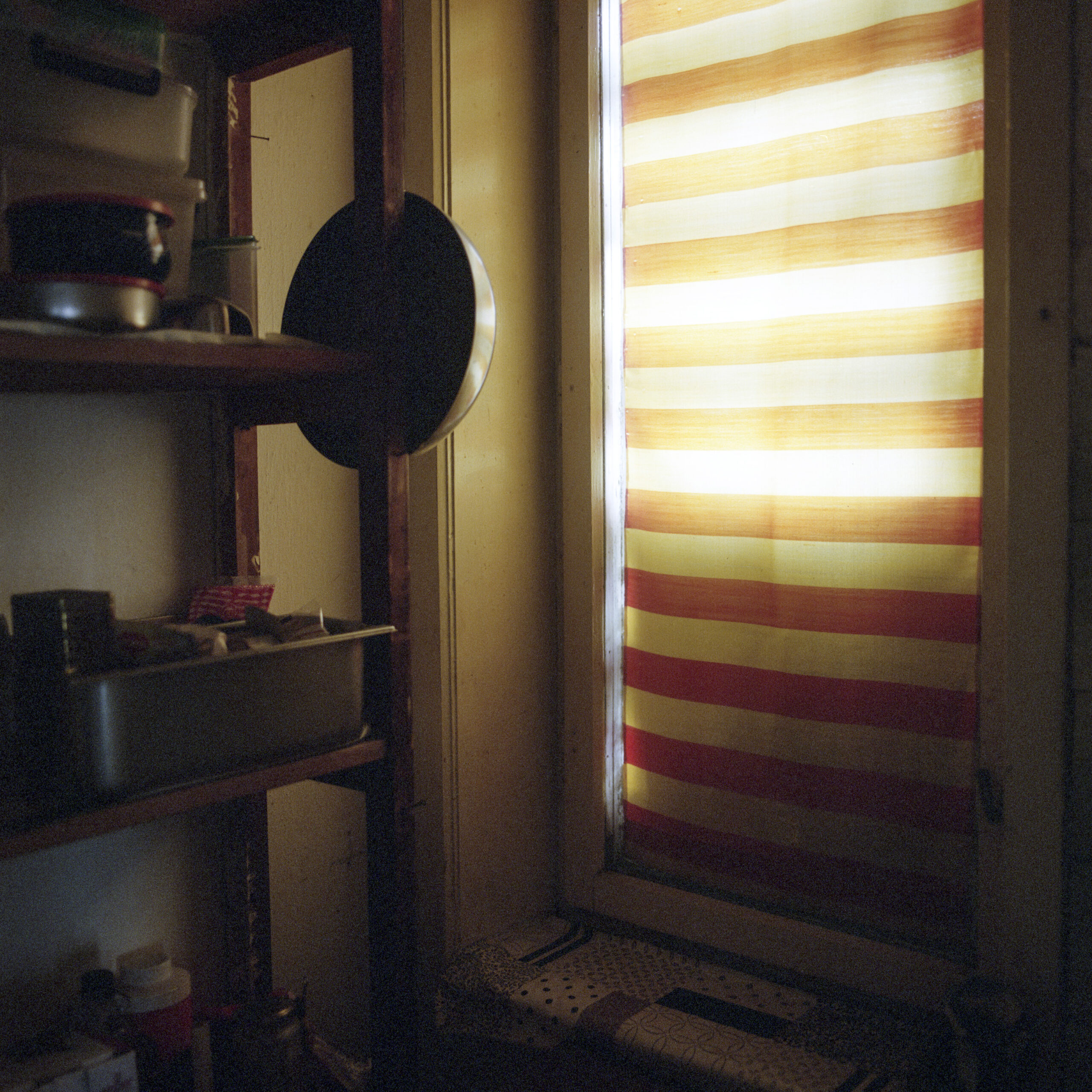
The shpajz is probably the place that brings back the strongest memories of childhood smells and a true treasury of flavors. At least that was the case for me.
It was a tiny, less than a two-square-meter space that served as a pantry. In our home, there was also a gas stove that my father would refill every time the 10-liter gas bottle ran empty, four times per year, as he recalls. It was an economical choice my parents made to use less electricity. The fact that the shpajz had a half-open window also helped ventilate the smells of cooking.
Sometimes pigeons would build their nest behind the window, but it never lasted very long. We get rid of them pretty quickly.
Inside the shpajz, you could find everything: fruits, vegetables, spices, oil, cereals, flour, canned food, small tools, machines used to prepare and preserve food, silver cutlery that my parents had received as a wedding gift and never used, spare lamps, and so on. And I am only talking about the things visible at first glance, without really knowing what was hidden behind all of it. It was incredible how many things my father managed to fit into that room over the course of thirty years.